 Live · Daily New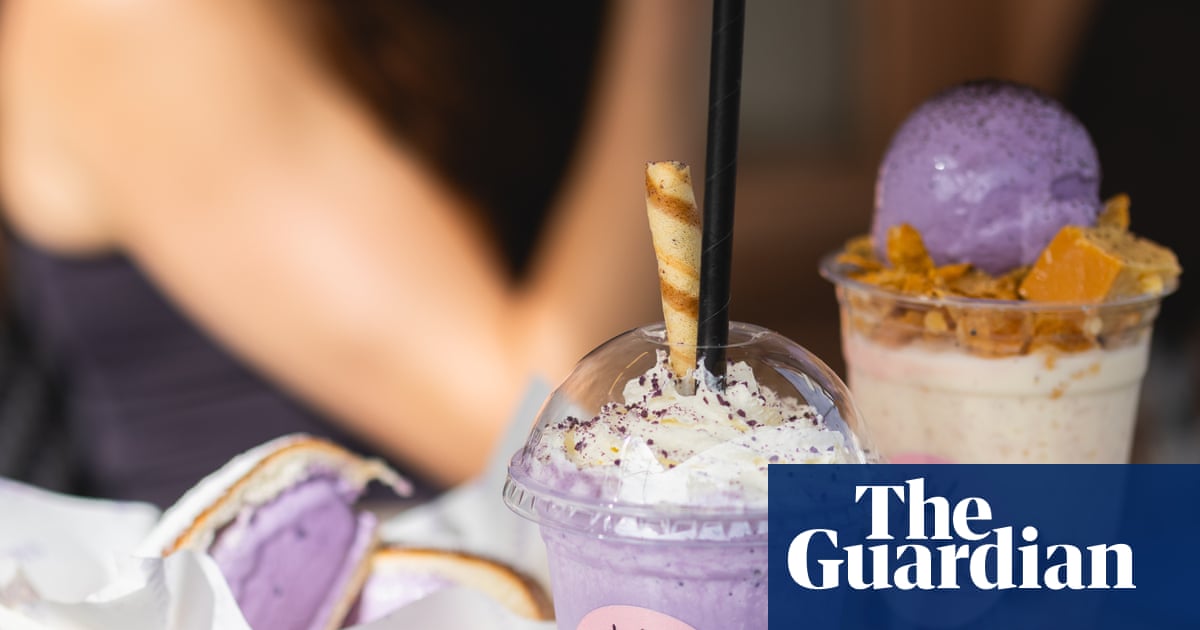
I n a corner of north London on a weekday morning, Filipino cuisine is thriving: diners at Mama & Sons in Kentish Town are making their choices, and one of the most popular items on the menu is the ube ice-cream sandwich. It’s easy to see the appeal of the light, fluffy bun encasing a purple scoop of ice-cream. The owner of the cafe, Omar Shah, says ube – a vibrantly purple root vegetable long-beloved in the Philippines – has exploded in popularity in the UK .
Just when he thinks it has reached its peak, it becomes “even more popular”. And this year, he says, has been no exception. Omar Shah, owner of Mama & Sons, says he is having trouble getting hold of ube right now.
Photograph: Jon Clements/The Guardian The purple yam has found its way into lattes, pastries and desserts, earning comparisons with the global matcha craze. Pret A Manger introduced the Ube Brûlée Iced Latte in May 2025 as a limited-edition summer drink featuring ube’s sweet, nutty flavour. Starbucks and Costa Coffee, two of the world’s largest coffee chains, introduced ube-flavoured drinks this year, marking the yam’s mainstream adoption.
Which is why the Philippines’ ban on fresh ube exports is causing such a stir. A shortage of planting material, coupled with concerns over maintaining control of the crop, has prompted the government to halt the exports. José James enjoys an ube cookie.
Photograph: Jon Clements/The Guardian “We severely lack planting material ourselves, and we don’t want to export it to countries that could use Philippine ube varieties to compete with us,” said the agriculture secretary, Francisco P Tiu Laurel Jr, in a statement . The export ban will not restrict sales of processed or frozen products, which are the primary ingredients used in the US and Europe. However, Shah, who also owns London’s oldest Filipino restaurant and five other eateries, says that he cannot get hold of any ube at the moment, although he has enough stock to last a year.
“Has the price [of ube] gone up? Yeah, I mean, but it was always up anyway ... if it goes up any more it’s going to be considered a luxury product,” he says. Jonas Salvador, 25, is at the cafe on Thursday and says he likes how experimental ube has become, with lots of “creative takes” on how it can be used.
His friend, José James, 22, agrees that “ube is having a moment”. He is from the Philippines “so it’s a taste from home”. Ube production in the Philippines rose 17% in the first half of this year to 5,660 tonnes, according to the national statistics authority.
But Tiu Laurel said the industry was “growing faster than its ability to produce”. The government wanted to expand domestic production before developing ube into a larger export earner, he added. Guillermo “Ige” Ramos, a food scholar and founder of the Ugnayan Center for Filipino Gastronomy, argues in a position paper that “when global market demand surged, local farmers exhausted their stockpiles of raw tubers to fulfil lucrative international export orders”.
He adds that this effectively depleted “the planting stock required for the subsequent agricultural cycle”. Ramos says: “Ube is not a manufactured colorant or a fleeting aesthetic trend; it is an ancestral root crop whose genetic continuity is under threat.” Shah says part of ube’s rise in popularity could be attributed to social media and the yam’s striking colour. Jennifer Creevy, content director at the analysis firm WGSN Food & Drink, agrees.
She says that, “coupled with its visual appeal”, demand is “very much coming on the back of the matcha effect”. The ube ice cream sandwich is a hit with Shah’s customers. Photograph: Jon Clements/The Guardian Shah has been working with ube for a decade, and says supply shortages have occasionally made it difficult to get hold of.
He has therefore put controls in place to maintain enough stock to last a year in case supplies become difficult to secure. “If all else fails and we cannot get hold of it, there are so many other ingredients from the Philippines that are versatile and just as delicious,” he says. One of those is “calamansi”, an ingredient indigenous to the Philippines that he describes as “incredible”, saying that it works particularly well in sorbets and pastries.
Creevy says: “South-east Asian ingredients and flavours will continue to rise, so if brands needed to look for alternatives, there are plenty. Two also from the Philippines [that] we’ve already called out are pandan and calamansi. Both have beautiful colour, and also fall into that gentle experimentation category.” Omar says his parents, who run London’s oldest Filipino restaurant, have always loved ube.
“It’s always been there. It’s never been a trend for them; it’s just something they’ve had all their life. So to see it outside, it’s nice.
To see the flag being flown.”
Source: The Guardian